 Case study · EV charging · Lagos
The brief
Find a charger, start it and pay, all from one app.
Electric vehicles are new on Nigerian roads, and so is the infrastructure behind them. Vine Mobility builds EV charging infrastructure software: charger networks, payments and grid integration for fleet operators. They needed a phone app that could turn a charger in a car park into something a driver can find, trust and pay for without calling anyone.
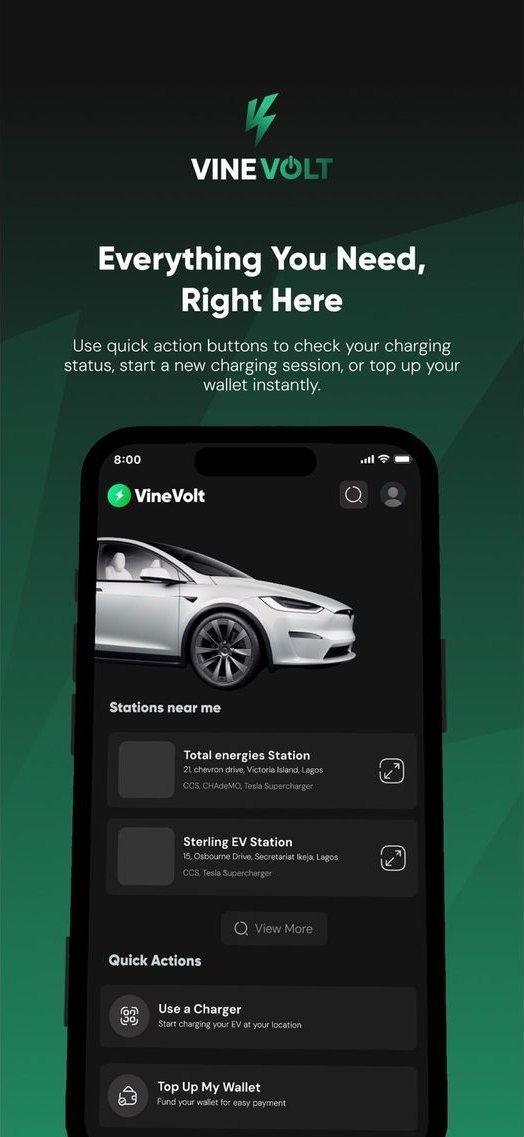
VineVolt does five jobs in one place:
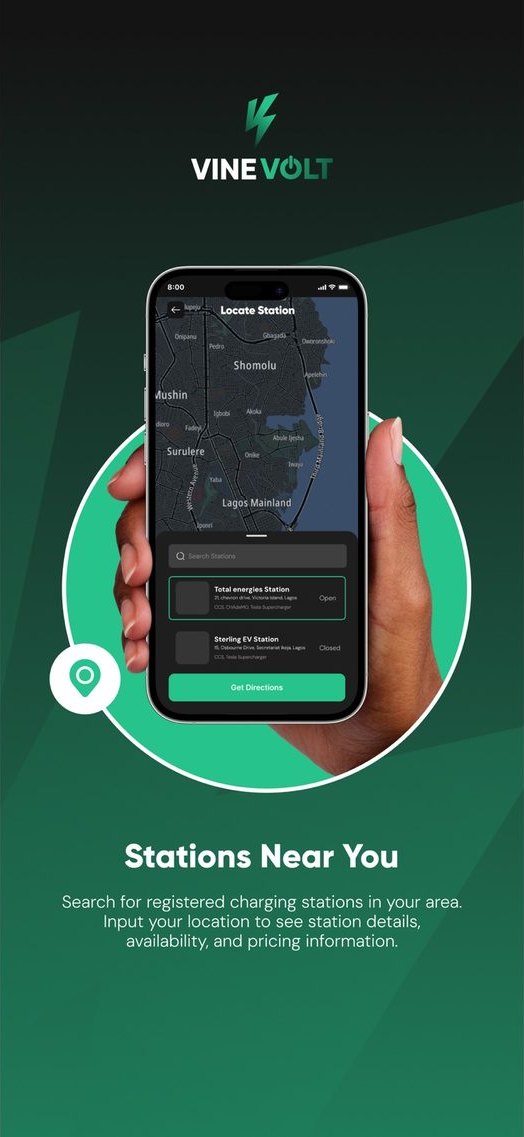
- Find chargers on a map, with station details, connectors and directions.
- Book a charging slot in advance.
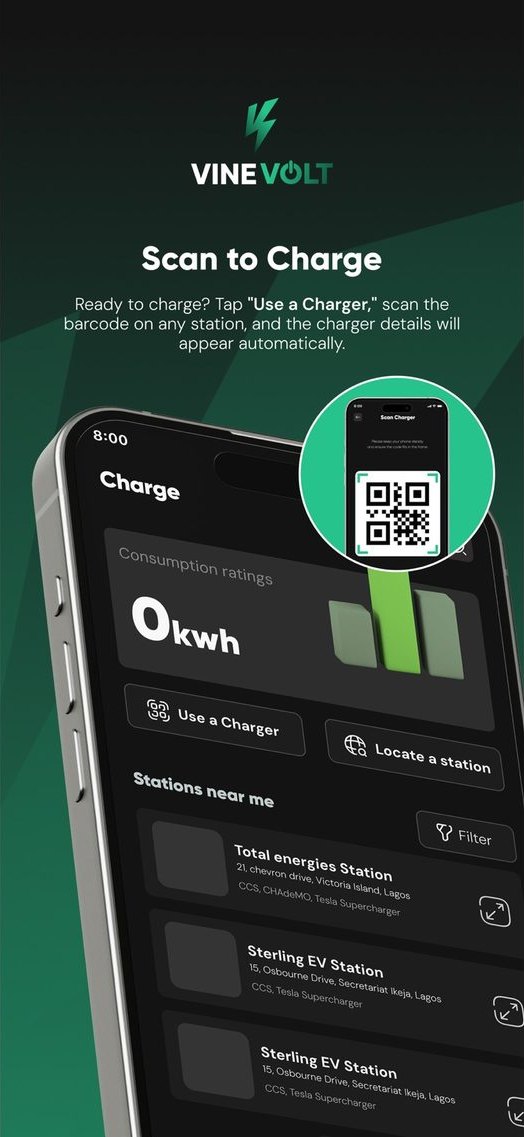
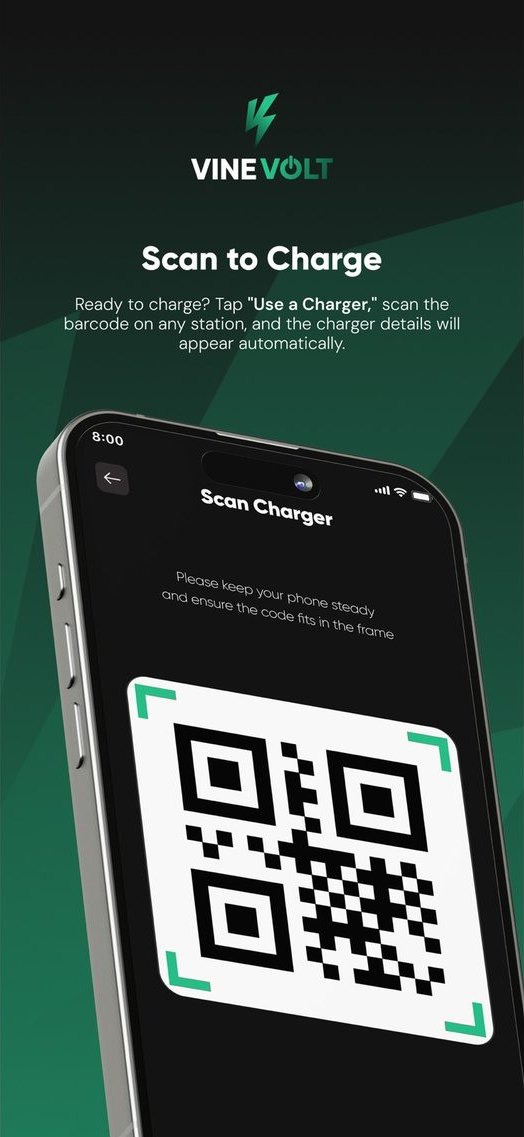
- Start and stop a session by scanning the QR code on the charger.
- Pay from an in‑app wallet in naira, with top‑ups, history and spending trends.
- Manage the account, including email‑OTP sign‑up and account deletion, which both app stores require.
I have led VineVolt's mobile engineering since the first commit in December 2024, and wrote it by hand, from before AI coding agents were part of everyday development. I work with founder Philip Ogunleye as product owner, alongside a full‑stack engineer and DevOps who run the Vine Mobility platform.
My contribution
Led the mobile architecture and engineering of VineVolt, building the shared application foundation for the driver experience:
- Flutter architecture: four flows on one shared core
- State management with Riverpod and navigation with go_router
- API integration through a typed client
- Charger discovery: map, stations, connectors and directions
- QR flow to identify a charger and start charging
- Charging sessions: booking, start, stop and the live session
- Wallet and payment flows
The architecture
Four flows on one shared core.
VineVolt covers everything a driver does around a charge: finding a station, starting a session, paying for it and managing the account. Each of those is its own flow, built on a shared core that handles sign‑in, the typed API client, state and navigation.
That split keeps the app easy to extend. A new payment option or a new station feature lands in one flow without touching the others, and every flow talks to the backend through the same tested client.
- StateRiverpod
- Navigationgo_router
- API integrationThrough a typed client
- Maps and locationGoogle Maps
- Charger identificationQR scanning
- Wallet and paymentsIn‑app wallet top‑up and payment flows
The team behind it
Built with Vine Mobility.
Vine Mobility builds EV charging infrastructure software for charger networks and fleet operators. Founder Philip Ogunleye owns the product. Their full‑stack engineer and DevOps run the Vine Mobility platform. I lead the two‑person mobile team that builds VineVolt.
The product
From map to charging in a few taps.
Under the hood
How the app talks to a charger.
It doesn't talk to one directly. VineVolt communicates with the Vine Mobility platform, and the platform connects to the charging infrastructure.
While a car charges, the driver follows the session live in the app, from start to the final cost.
Built to grow with the network
New stations appear without an app release.
Stations, connectors and pricing all come from the Vine Mobility platform. When Vine Mobility brings a new station online, drivers can find it, book it and pay for it in the app straight away, with no update to download.
VineVolt is a product of Vine Mobility & Technologies Ltd. This case study highlights my contribution to the mobile application as Lead Mobile Developer.