 Case study · Ride‑hailing · Lagos

The brief
Book a ride in Lagos and watch it come to you.
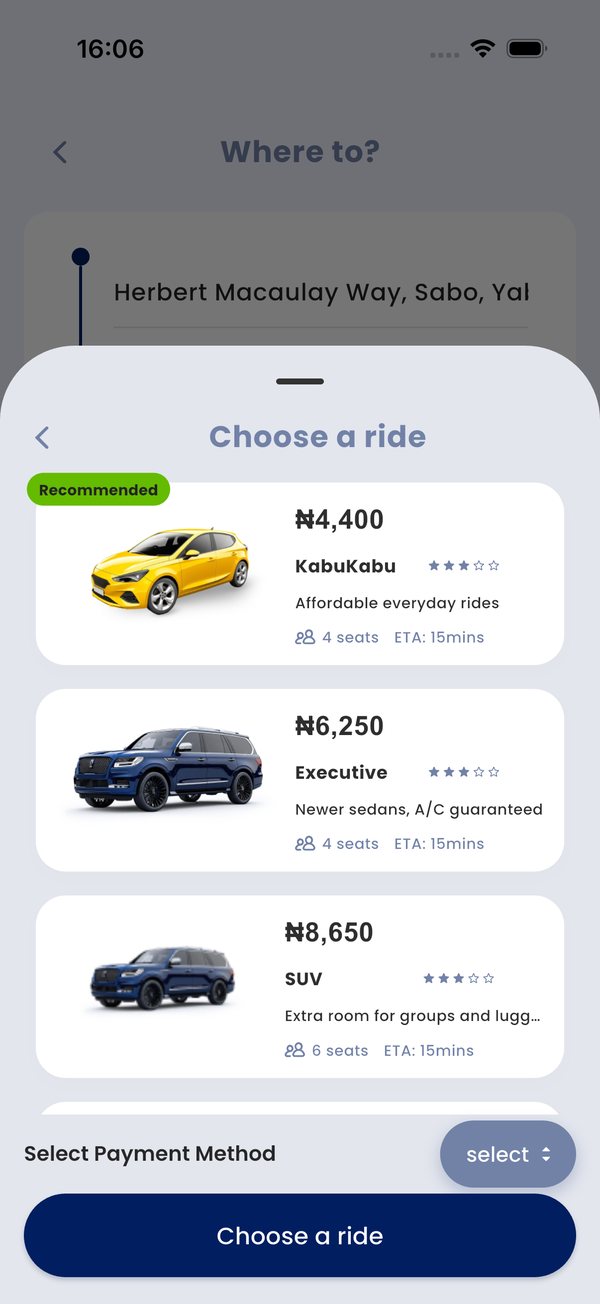
Riders book a KabuKabu, Executive, SUV or Chairman ride, see the price before they confirm, and follow the driver to their door and on to the destination. Drivers go online, get ride requests with a countdown to accept, and run the trip from pickup to drop‑off. Instead of taking a commission, Wakajugbe charges drivers a monthly subscription, so they keep their fares.
I joined at the start and, in my first week, set up the structure both apps grow from: one Flutter codebase with separate rider and driver flavours, each with its own routes and store listing. From there I built and led the data layer that talks to Wakajugbe's API, and the real‑time trip flow across both apps, working alongside a team of eight‑plus Flutter engineers who built out the remaining screens.
Over ten months I made more commits than anyone else on the team. My work centred on the parts that have to be right every time: the trip view models, the maps, background location and notifications.
The hard part
Keeping rider and driver on the same trip, in real time.
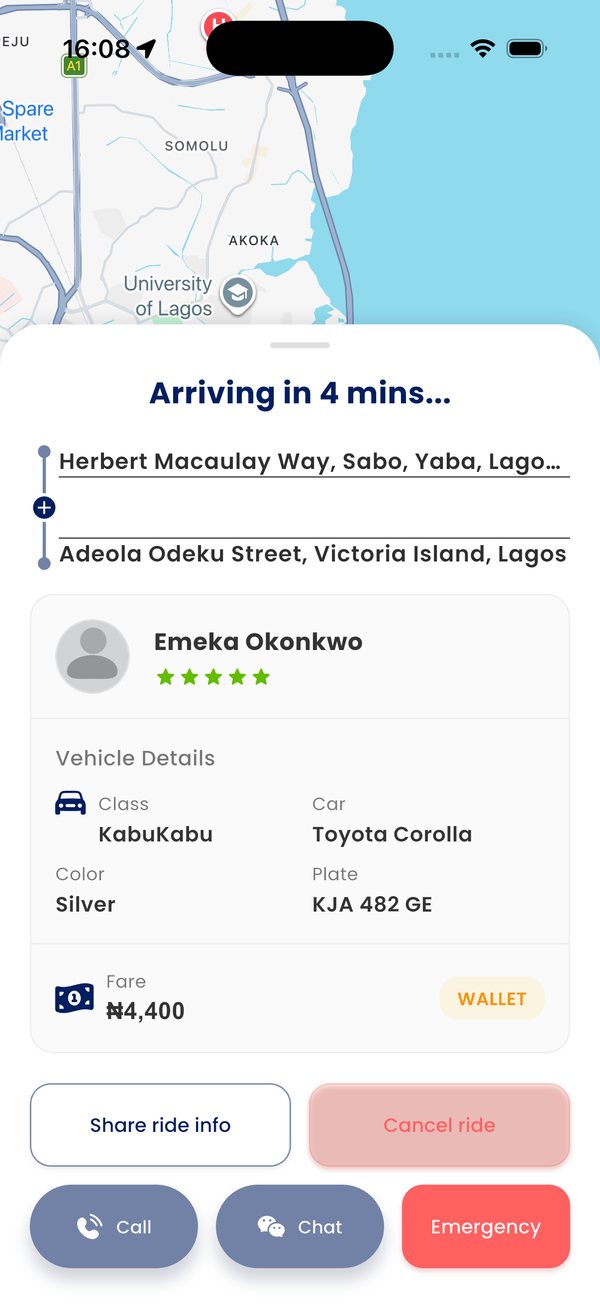
A ride is a conversation between two phones. The driver accepts, heads to the pickup, arrives, starts the trip and ends it, and the rider's screen has to follow each step within a second, even on patchy mobile data.
I moved the trip from a socket connection to Firebase Realtime Database. Each rider and driver listens to their own node, and every change to the trip arrives as an event that moves both apps through the same seven stages, from searching to completed. Cancellations and "no driver found" travel the same way, so neither side is left waiting on a trip that has ended.
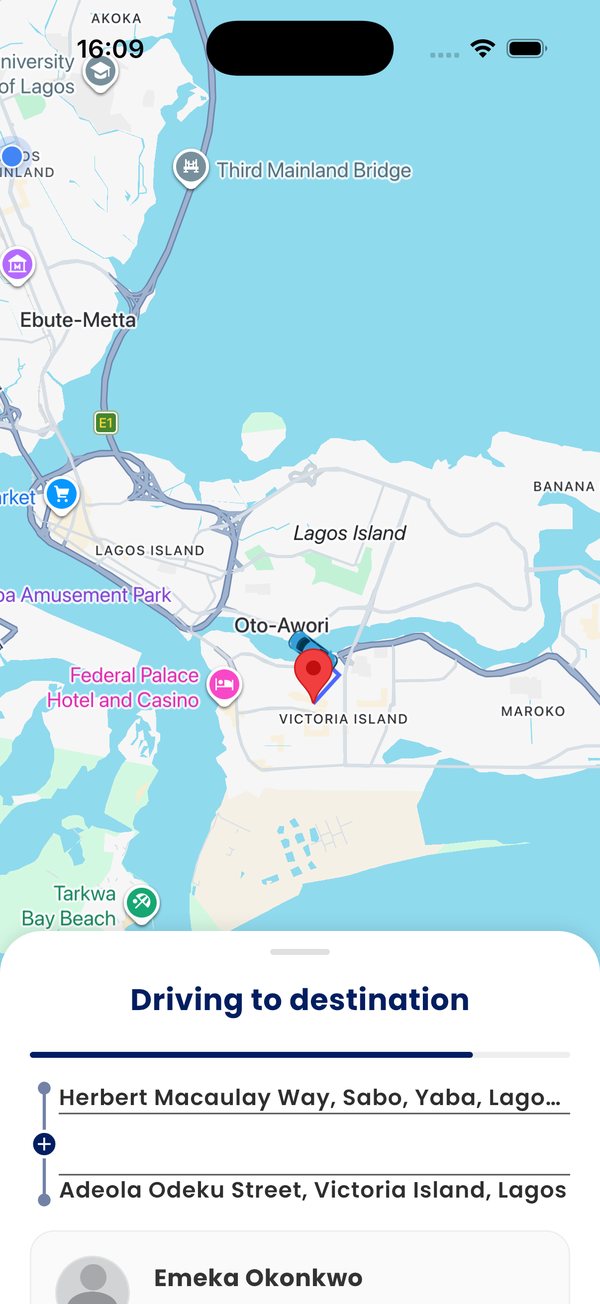
On the map, the car glides between location updates instead of jumping, turns to face the way it's heading, trims the route line as it's driven, and redraws the route if the driver leaves it. On the driver's phone, a background location service keeps the trip and the car's position updating even when the app is not in front.
The rider app
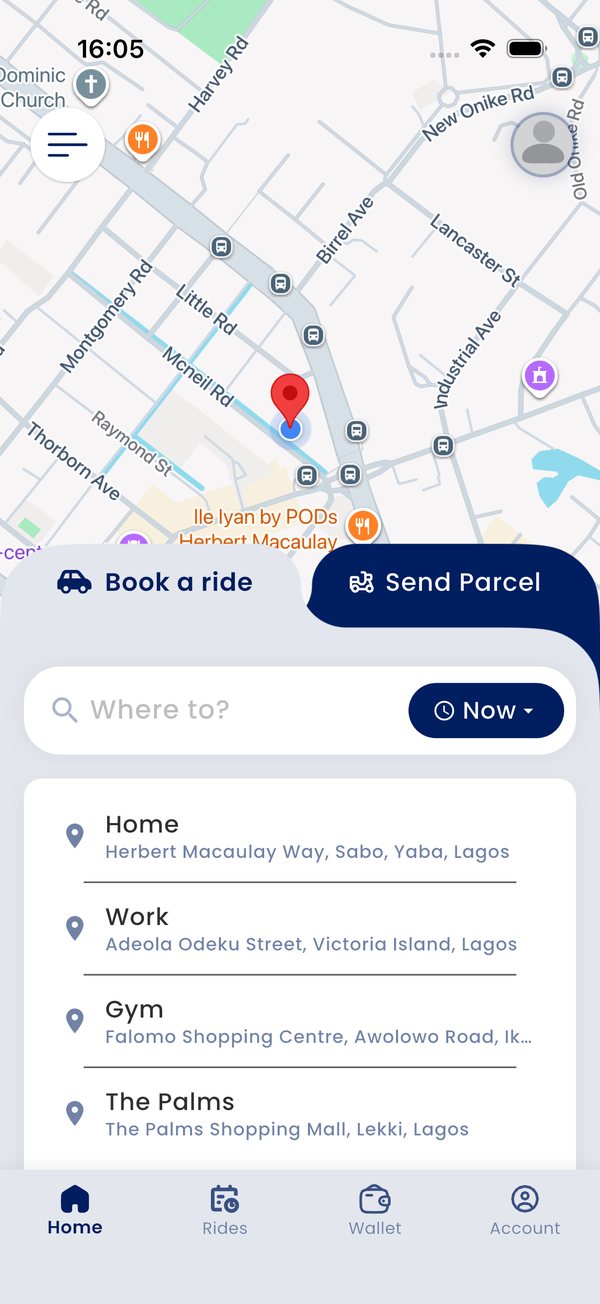
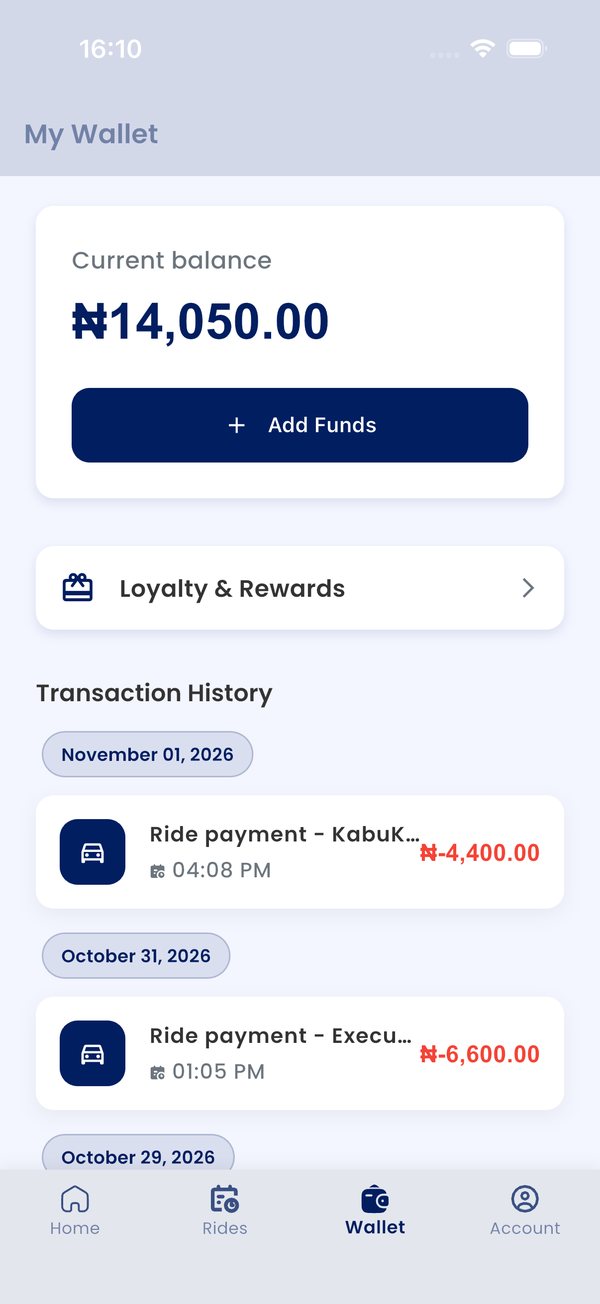
Choose a ride, follow the driver in, ride, rate and pay from the wallet.
The driver app
Go online, accept a request, pick up, drop off and keep a record of every trip.
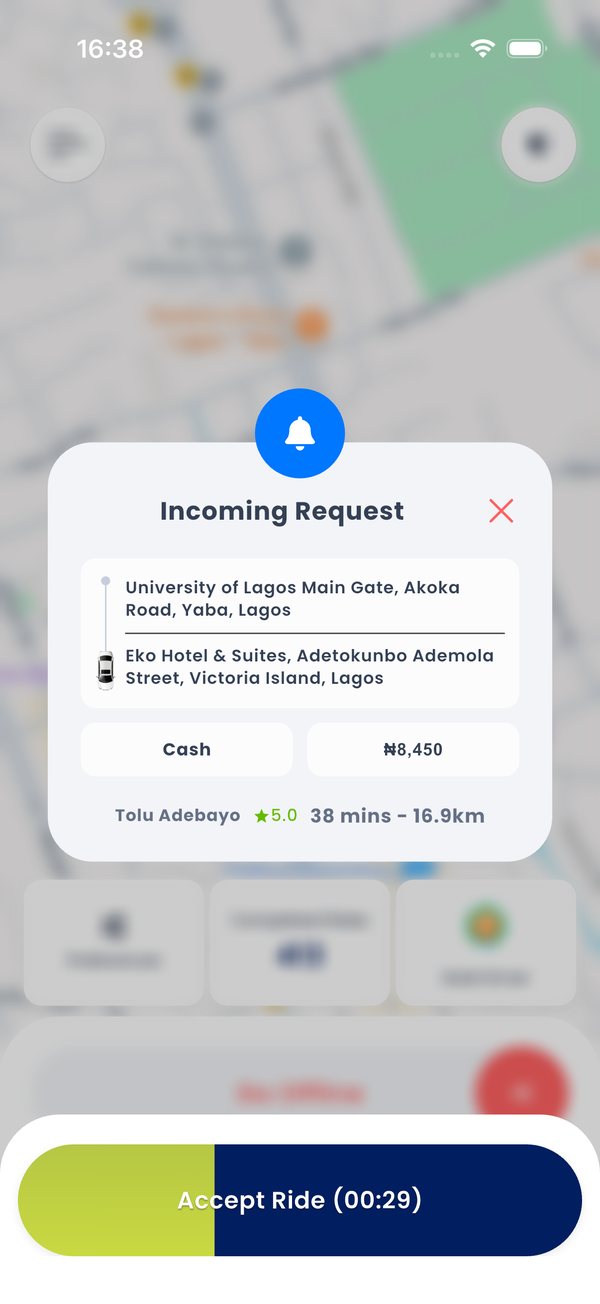
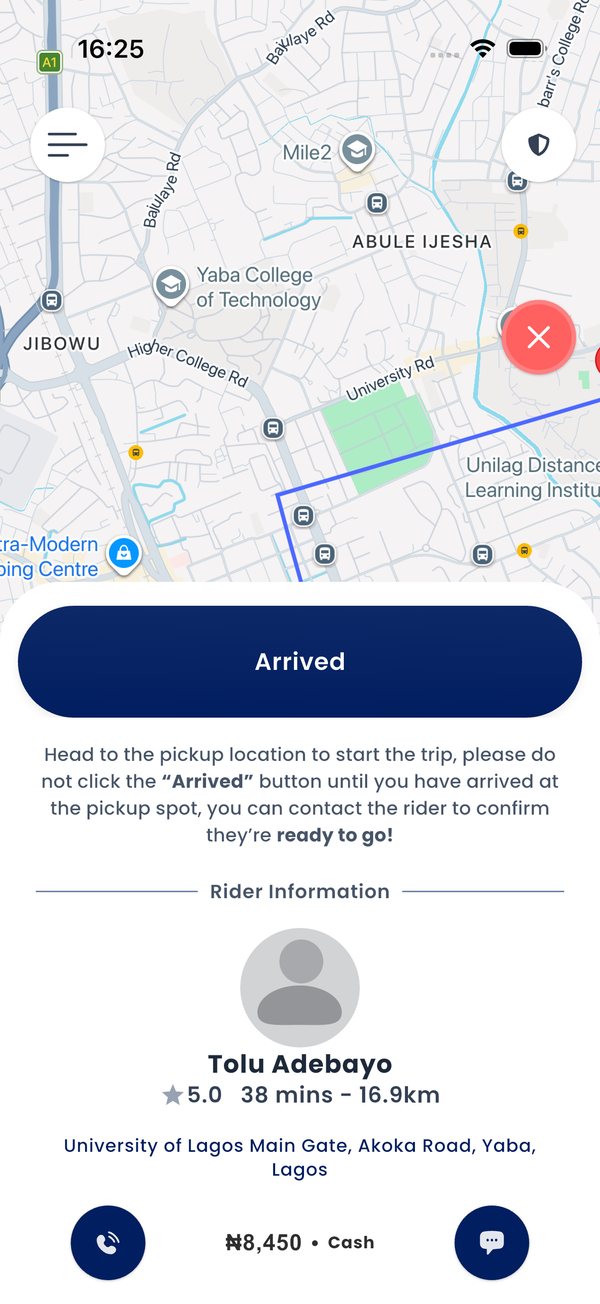
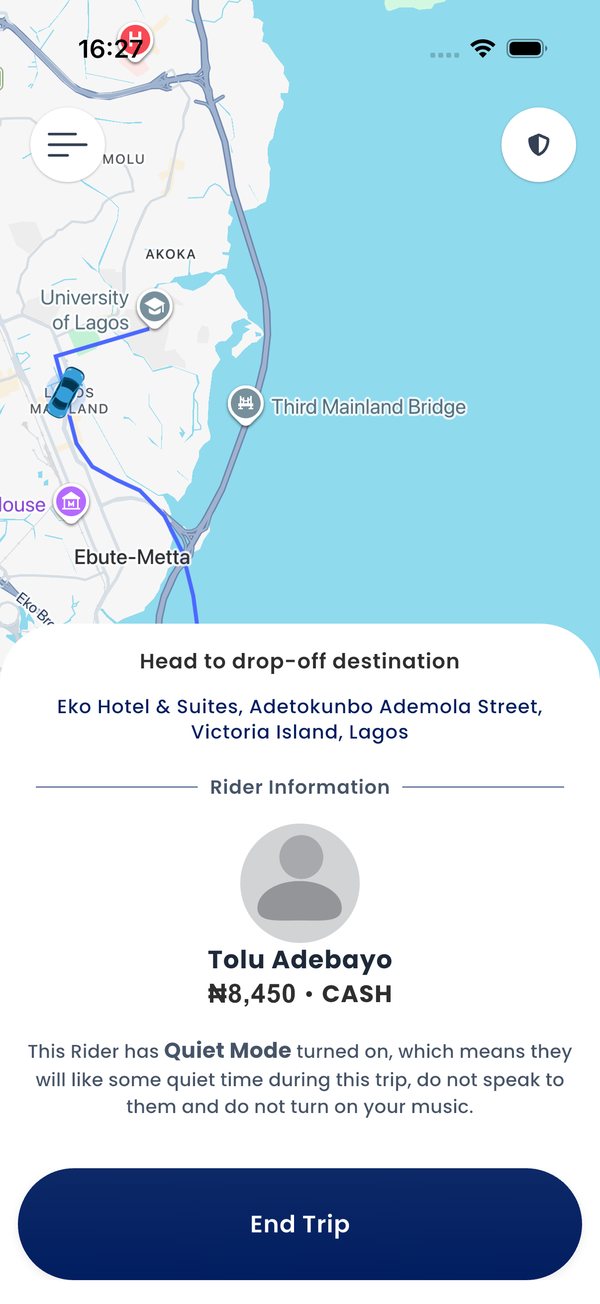
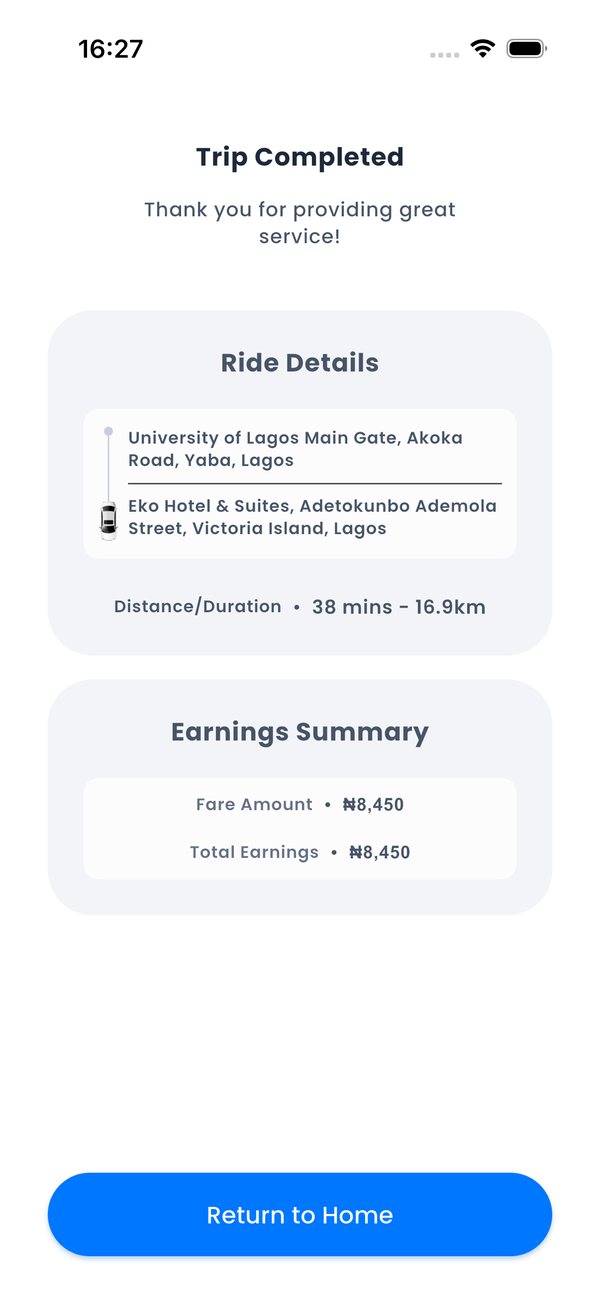
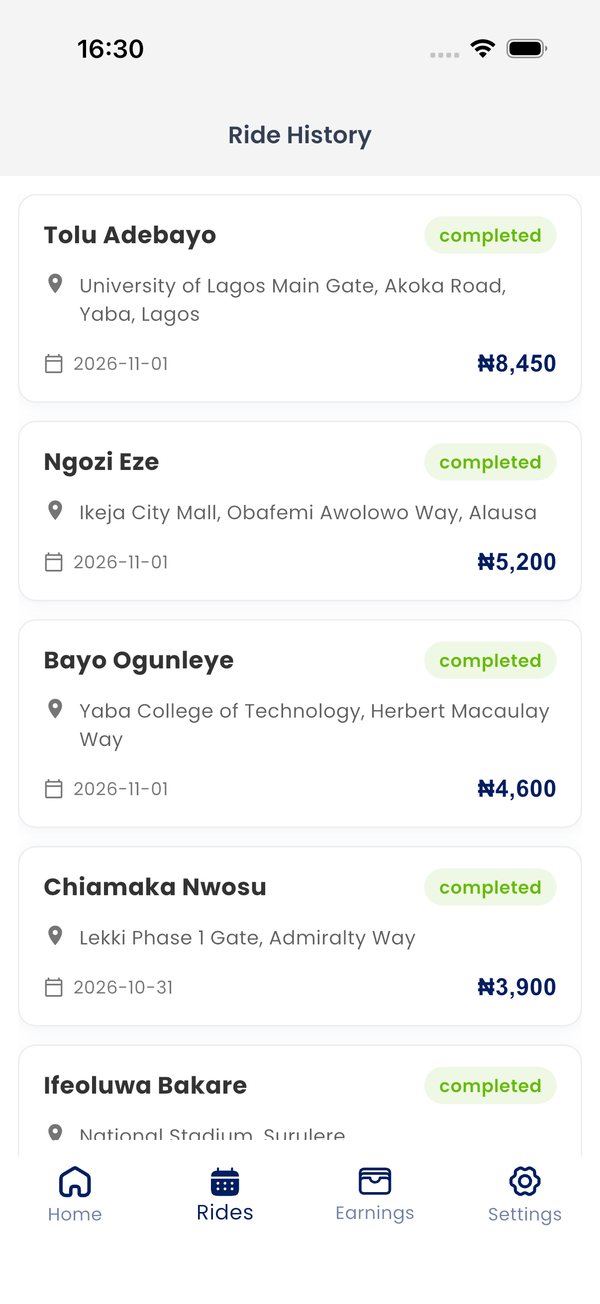
Screens captured from both apps running against a mock backend I built for this case study, so names, trips and balances are illustrative.
Where it stands
Delivered, and in closed testing.
Both apps were delivered to Wakajugbe and released to closed testing on Google Play: a rider app and a driver app from one shared Flutter codebase, with live trips, maps, payments, chat and background location.